Monday, April 15, 2019

Examples of Good and Bad Websites

Examples of Good and Bad Websites
By Emerson Cooper


In this blog post,  I will be summarizing my Website Smackdown. I will compare two websites with similar purposes and discuss their strengths and weaknesses.
There are many pieces that make a website strong. First, the webpage must have an appealing appearance for the audience to view. There should be a good use of color, that matches a common scheme of 2 or 3 main colors. The text should match the color scheme and be simple for readers to view. Overall appearance should be simple and not be too much. There should not be too many graphics or photographs, or else it could take away from the main design. Next, the site must be fully functional. All parts of the webpage should work promptly and successfully, as well as a search engine bar. The website must be simple to use. Readers and viewers should find the site to be easy to navigate as well as simple to understand. The site should be quick and fit the resolution of the computer. And finally, the content must be adequate for the topic being discussed. This content should be adjusted often and should be very organized. Visitors should be addressed as “you” as often as possible.


I selected Petfinder.com and rehomeyourpets.com. These two sites are for buying and selling pets online. Petfinder.com is the great example of a successful website, while ReHomeYourPets is not so much of a great site. Petfinder is an excellent example of a successful website. This webpage follows one basic color scheme, and is easy to follow. While it is easy to follow, the website is well-organized trustworthy, and safe. The webpage offers the organization of many different animals to select from as well as bringing a radius for distance and locations. The website organizes by breed and type. Furthermore Petfinder.com offers viewers options for care for each individual pet type.
Image result for petfinder

Image result for rehomeyourpets

ReHomeYourPets.com is more of a poor example of an online pet shopping website. ReHomeYourPets shows pets for sale as well as allowing users to post unwanted or fostered pets. Although it offers many features, the website still lacks organization and options. Moreover, the site is not secured like Petfinder is. The webpage does not work by location, nor by breed. Unlike Petfinder, this webpage does not offer care options. View my online presentation from the link below, to learn more!


Thanks!
https://www.youtube.com/watch?v=Rc9LOmmpkpE&feature=youtu.be

Sunday, April 7, 2019

Social Media Tools

Image result for google plusIn this blog post, I will be exploring two different social media tools that I have not mentioned before. The first one is the Google Plus App. I, personally, have never utilized this tool, but after some extensive research, will definitely begin using. Google plus is a social media network owned by Google. The application contains basic social network services, such as a profile picture, a list of interests, location, a biography section etc. This allows the site to compete with other social networking sites, such as Instagram, Twitter, and even Facebook. One feature that caught my eye was "Circles". By enabling this feature, an individual can share specific content to only a certain circle of people. In this way, content is not overshared, but instead shared to a smaller audience. Stream, being the main page, allows users to see people within their circles and communities to see updates and posts regarding their businesses and their lives. And lastly, this page can be used as the background to many other sites, such as Google Maps, Google Play, YouTube etc. all making it easier to navigate through social media. I can definitely create an account and use this in the future. Not only will I be more easily able to contact my friends and family, but I can use this professionally for school purposes. By using this for school reasons, my workload will be more organized and easier to access and share with peers. Image result for google plus homepage

Related imageThe next web tool that I am going to explore within this blog post is called, MavSocial. This is a content management tool that allows users to access all their social media within one site. Not only does this tool allow organization and management, but it also allows users to create and publish their work directly to the social media platform. One tool that caught my eye was the digital asset managing tool. This allows users to access their stock library and perform photo editing on their future content. This is inclusive of videos, images, and audio files. This next feature that was interesting was the campaign planning. This allows individuals to make a professional campaign for marketing. In this way, social media, for all the sites that a user has, is made to be professional and concise. I can definitely see myself using this tool. I could use this tool to improve my organization of social media. Although I do not use social media too often or too vastly, for the sites I do have, I would like to stay professional. By utilizing the different features of MavSocial, I will be able to stay on top of my social media account for business and professional purposes, while maintaining a proper reputation. Image result for google plus homepage

Story Telling Tools

Here's my test products of three different story telling tools! Enjoy!

ToonDoo


Make Belief Comix


Pixton


Sunday, March 24, 2019

Social Media Etiquette Project

Here is the Link to my Social Media Etiquette visual presentation! Enjoy!
https://youtu.be/lJcrGDm4h1Q

Image result for kim kardashian flat tummy co

Saturday, March 2, 2019

Smackdown Assgn 2: Note.ly


I have chosen to do my second Smackdown Assignment on the web tool called Note.ly. This online web tool allows users to create sticky notes on an online browser. All you need for this, is an account, which is entirely free. Using this web tool is simple. The webpage is found easily at the link: http://Note.ly. It brings you to a blank screen, with a cork-like wall. At the top of the screen, there is a row of icons. The most left icon, is a plus button. This button is the main feature for Notely. It is the tool for adding a sticky note. Next to that button is a pencil and paper icon. This is the to-do list feature, which will be explored later. And after that tool is the add image option, then the customization option. Each icon at the top, offers instructions of how to use each icon.


Note.ly can be used for a variety of reasons. First and foremost, it can be used to organize.
Many people, especially students and individuals with high stress careers, are forced to stay
on top of their work and stay organized. With note.ly, users can create sticky notes for their
vital information. This web tool can also be used for reminders. Individuals can utilize the sticky notes to mark important dates, events, or assignments. This reduces risk of forgetting or falling behind in school or your job. The next way this tool can be used is to create To Do Lists. There is a feature available on this page, allowing users to categorize and prioritize their lists. Whether it be a list of tasks that must be completed, or a simple list of items to be bought from the supermarket, this feature is time-saving, as well as very organizing for important data. The tool can also be used for studying notes. The user can implant the important information for a test, quiz, or really any data that must be learned. From here, the user can learn and study information on any browser or device. Note.ly can be used for Brainstorming Ideas. This is particularly helpful in collaboration teams, whether this be at school or at a job. The tool allows users to share their board with others, and so their brainstorming ideas can be shared with team members. And lastly, as mentioned, this can be used for Project Management and Sharing Information. This tool lays out information to be shared in an organized and neat manner. This makes sharing easier and more efficient. There are many benefits to Note.ly. This tool is incredibly simple to use. While there are many features and different options offered, the tool itself is straightforward and quick for one to learn. Note.ly is Green. This tool saves paper, as it reminds over a screen, and no actual paper is wasted. Signup is entirely Free. There are no charges that come with this tool. The tool is available On all Browsers, allowing users to be able to access this information, wherever there is internet connection. And finally, the tool is completely Customizable to its users. The wallpaper, notes, font, sizes, and images all can be changed. This allows for color coordination and prioritization of the information that you want to keep.


As a junior nursing student at Stockton University, I find this tool extremely helpful. This
tool is not limited to any particular major, as it can be used by just about anyone who is
in search of some help organizing. Remembering, let alone prioritizing all my assignments,
exams, and essays is very difficult and stressful. With this tool, my organization has been
notably improved. With this tool, students are easily able to stay on top of their work,
as well as get ahead and work most efficiently. As a future nurse, this tool will again come in handy. Not only will I be able to use this tool within my job field, but I also will be able to utilize it outside of my career. This tool can be used in the nursing field, as nurses can use the pad to organize and triage their tasks and data to the best of their ability. By using an online tool to assign their information, the nurses are less likely to make mistakes due to handwriting error. Furthermore, this tool can be used for outside of work to plan schedules and remind about significant events. Overall this tool is not limited to nurses, or even students for that matter. Any person who yearns for an organization tool, I highly recommend this one, as it is easy to use, but also very helpful.

Here is the Link to my video Smackdown Assignment:
https://youtu.be/TTV_jUyD8jA

Sunday, February 24, 2019

Blog #4, Chp 4 The Connected Educator


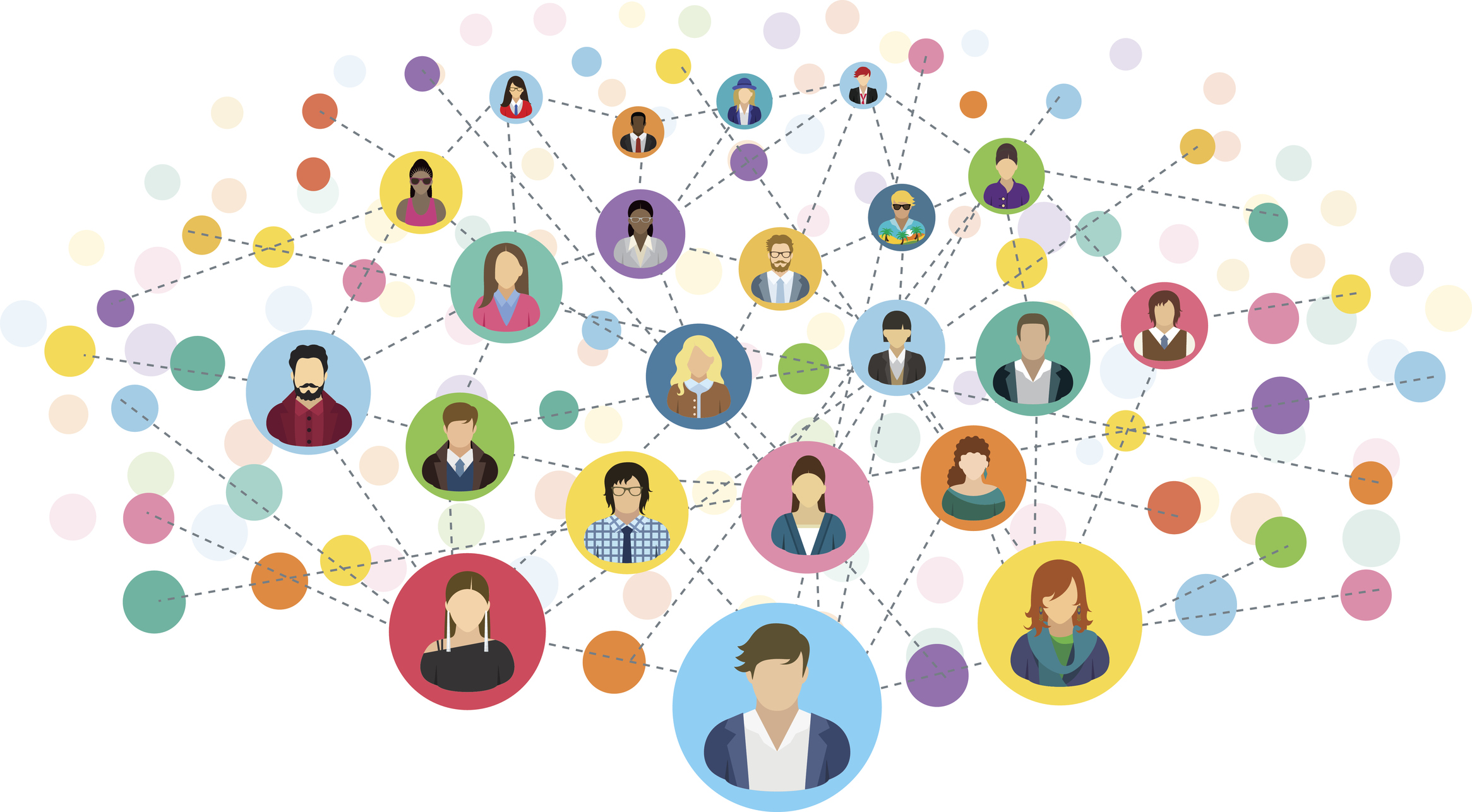
The fourth chapter of the Connected Educator is called “Building a Collaborative Culture”. The author emphasizes how important it is for one to develop relationships in their professional career. In past chapters, the author frequently offers technological and educational tools to further and enhance one’s professional reputation and career. In this chapter, the author urges readers to create relationships and connections with individuals in the same field. Creating these solid connections with coworkers, or even individuals with the same common goal, develops a sense of trust and helps that common goal get achieved more efficiently and rapidly. There are two types of relationships that appear to be needed: congenial and collegial. Congenial relationships are cooperative, happy, and pleasantly working in the same environment. Collegial relationships are those in which there is shared responsibility among colleagues. Perhaps more important is collegial relations, because these are take more seriously and are more goal-oriented.

Image result for connections human

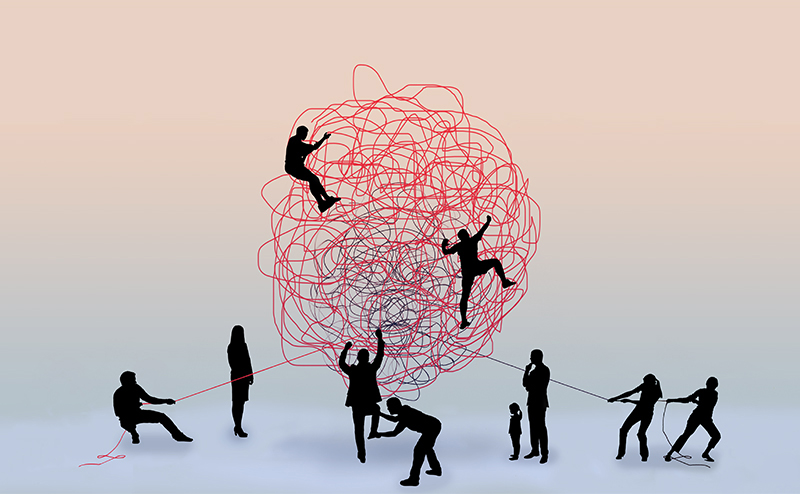
Within the chapter, the author mentions the four stages of collaboration within a group of colleagues. The initial stage, known as forming, is similar to an orientation. It is when the members initially grow comfortable among each other and get to know one another. Storming, the next step, involves conflict, confrontation, and basically much disagreement. There is not peace made in this stage, but there must be disagreement to build an efficient team. The next phase is known as norming. In this stage, there becomes common ground amongst members, and they calculate what is the best way to meet their end goals. And the final step, known as performing, is when the goal is accomplished and the relationship is fully developed.

Image result for connections human

While I understand that developing relations is vital to all fields and all careers, I truly comprehend how this relates to my future career as a nurse. In the medical field, specifically in the hospital, there are many different jobs, stages, and levels. There are nurses, physicians, technicians, surgeons etc. I think that developing these collegial relationships among other jobs within the medical field is vital. It is so important to establish trust between employees. With trust among members, the common goal, which is help and save patients, is much easier to reach. Moreover, it is essential for myself to form these collegial connections among other nurses. Nursing is a busy and high stress job. Developing these relationships will not only help the goal get reached more efficiently, but it will make the stressful job, not as difficult.

Sunday, February 17, 2019

Blog #3: Chapter 5 The Connected Educator

Chapter 5 of the Connected Educator is titled “Using Tools to Support Connected Learning”. The authors of this novel introduce different ways in which we, as connected learners, can utilize tools to support our professional careers. As we know, tools cannot be used to their fullest potential, unless we truly understand how to use them. The authors remind learners of connected education to create a consistent and professional username throughout different websites. There were three basic tools outlined within this chapter, including bookmarking tools, connecting and collaboration tools, and continued education in the classroom.

Related image One of the initial tools introduced was tagging, otherwise known as social bookmarking. This concept is a simple way for individuals to organize the information that is gathered online. In this way, it makes it more simple to be shared with other users. There were two websites offered from the novel, called Delicious and Diigo. These tools allow users to bookmark the information and knowledge they deem valuable from the internet. These sites assist individuals in saving and tagging their online resources, and moreover organize so that users can gain easy access to this information. The second piece offered by the authors was the connection and collaboration tools. Some examples of these tools were blogs, podcasts, google reader, google docs, wikis, and twitter. These websites, or tools, offer users the ability to outlet information or read about information of specific topics. Blogs allow users to read about those topics or even write about topics that interest them Podcasts are digital audio files on the internet that can be downloaded by listeners. Podcasts are designed for audio purposes and allow listeners to gain knowledge this way. The final tool offered in this chapter are those for teachers, for continued and extended learning.

Image result for wiki All of these tools can be useful in my future career as a nurse. As mentioned in previous blog posts, education as a nurse does not end when we graduate. There is always further knowledge to be gained in the medical field. As time goes on, science is always expanding and humans are learning more. This strongly correlates to nursing, because as more information is discovered, there is more information that we must apply to the medical field, meaning that nurses can always continue their education. Delicious and Diigo can be used in the nursing world as I can organize the information that I deem important to my field of study. Moreover, using blogs and podcasts allows for my to not only connect with others with the same professional goals as myself, but to gain more knowledge by researching the information I am hoping for. I think for my professional career Wikis are the most useful as the information is easy to access and understand. The website is simple to navigate and it is full of vast information. After reading this chapter, it brings up the question, do all careers require continued education like the medical field?


Sunday, February 10, 2019

App Smackdown- 1 Medscape

I have chosen the app called Medscape to complete my first Smackdown Assignment on. Medscape is a medical reference guide that provides users with information regarding medications, conditions, procedures, and up-to-date information regarding clinical guidelines. The app provides an online database to its users. This allows users to access the medical community that includes more than 250,000 physicians worldwide to ask questions and share information, cases, and experience. The app itself is very simple to navigate, and provides step by step tools and instructions to reach the information on is trying to gain.

Image result for medscape

Medscape can be utilized by various healthcare professionals and medical students. This application provides users with multiple different references regarding the medical field. The fields within the app that I viewed as most critical and important to the medical world were the reference tabs. the Drug Reference Tool, the drug interaction checker, the pill identification guide, the medical calculators, and the clinical guideline tab. The most useful tool is the reference guide. The reference guide provides users with organized information of different medical conditions and illnesses as well as procedures. The information in this is well-formatted and it is easy to find. The illnesses are organized by their topic of medicine, such as "dentistry" or "cardiology". The procedures are listed by their bodily system, such as "obstetric and Gynecologic" or "Brain and Spinal Cord". There is updated information and articles regarding the condition or procedure, provided by doctors and other medical personnel. The app, Medscape, also contains a Drug Reference Tool, assisting healthcare professionals in looking up drugs and their dosages. This tool drastically saves time for medical professionals. A user will click this tab, then select their drug of choice. If I wanted to learn more about Abilify, I would select this name. Upon selection I would be given the dosage and indications, as well as adverse effects, interactions, and much more. Additionally, it cross checks interactions between different drugs, and their possible adverse effects. The User would type in 2 to 30 different drugs to see if there's any possible danger in their combination. Next is the tool for pill identification. The user would provide the shape, the color, and the markings. The app would then be able to figure out the drug or narrow it down to a select few options. There are many medical calculators offered on this app, as healthcare providers use these daily. The app gives information regarding the latest clinical guidelines. This is essential in healthcare profession, as these guidelines must be followed. Having the rules right at your fingertips, makes these much more simple to follow.

Image result for nursing clip art

I am currently a Nursing student at Stockton University. This app can be used for myself both in and out of school. I can, along with all other students with a medical major, use this app to reference information, including that of medications, certain medical conditions and illnesses, and specific information on procedures. Moreover, the calculator can be used in problem solving too. This can be used in the clinical setting in school for myself. While this app will be helpful for myself in school, I believe it will be vital as a nurse. In school, we are taught about endless drugs, conditions, and procedures. While important to know the basics, it is impossible to memorize everything. That is why this guide would be essential for nurses in the workplace.Clinical guidelines and rules are being changed nationally all the time. This tool allows nurses to stay on top of the dynamic guidelines in the healthcare world. Nurses are very busy on the job, so utilization of tools, such as the hundreds of medical calculators provided by this app, results in time-saving and the completion of providing entirely accurate information. These are just a few of the items that nurses are able to use from this app, more items would include the directory, the pill identifier, and the pricing/saving tab. Overall, the app Medscape can be used by students with medical majors and by all healthcare providers, as the information is endless and organized throughout the mobile app.

Here is the link to my virtual presentation!


Thursday, January 31, 2019

Chapter 6: Connected Educator (Blog 2)

Image result for nursing learning
In chapter six, of Sheryl Nussaum-Beach's novel, The Connected Educator: Learning and Leading the the Digital Age, the author summarizes how to create your Personal Learning Network (PLN). This can be applied to all careers, not just teaching, as it is displayed in the novel. The initial step of creating the Connected network for your personal career is to develop and determine your goal. What is the purpose of your networking and what would you like to learn? A beginning networker must keep in mind that developing a PLN takes time and that the individual must accept their position as a Learner above anything else. Next, the individual must select their tool of choice, whether it be blogs, photo-sharing, or Twitter. One must consider the outcomes when choosing their tool. What is it that you want to display into the physical realm and which tool would be most efficient in doing so? A learning individual will want to keep their username the same across different tools and may want to select a mentor if need be. The next step involves usage of the tool. The individual must select carefully who it is they wish to follow, basing off of who has the greatest value to their network. One can look at respected bloggers or Twitter users and see who they follow. From here, the learner can choose to follow some of those individuals. One must ensure these people are trustworthy and helpful before following them.  From here, the individual and the members within his or her Personal Learning Network, are free to share and discuss information regarding their common goal or topic. While there is endless information about every topic, developing a network as this allows organization and adequate sharing of knowledge.

Image result for nursing learning

This Personal Learning Network (PLN) can be applied to my future career as a nurse in many ways. Initially, as the chapter mentioned in the beginning, there is endless information to be gained from accessing the internet. Creating a Personal Learning Network would further my career as a nurse, because this would allow me to develop deeper connections as well as relationships with both leaders and learners. By finding others with similar goals as me, helping others medically, I can share the information I know, while also learning much information that I did not know. As a future nurse, I must remember that being a learner is first before my career. Especially in the use of a PLN, there is always more information to be learned and there will NEVER be a point that I know everything. Learning is beneficial in every career, however, in nursing it is entirely essential to always be learning. In the medical field, there is constantly ever-changing information. Scientists and researchers are consistently realizing and discovering new information. Networking will aid me to keep up with the modern dynamic, medical world. Developing a Personal Learning Network will allow me to always learn and to be able to connect with many others with the same career goal as myself. This will encourage me to be a more efficient worker, and to be the best nurse that I can be.   

Tuesday, January 22, 2019

Chapter 2 Connected Educator


Image result for nurse education


In the second chapter of the Connected Educator, the author describes a “three-pronged” model, known as the Connected Learning Community Model. Within this approach, there are three parts: Local Community, Global Network, and Bounded Community. The purpose of this model is to ensure the sustainability of a specific profession, allowing people to connect and collaborate and reach the desired, shared goal in their career field. The book offers a perspective from that of a teacher or an educator, however, this model can be utilized in just about any field of study and applied to almost all professions. This would include my future profession as a nurse, as I saw many parallels between this model and the continuing education and need for knowledge within the field of nursing.

Within the first few pages of this book, it is mentioned that through the use of these workshops and learning activities, “teachers” are expected to take back the knowledge they have gained and utilize it in their classrooms. This concept relates to my future profession as a nurse, but can also be related to almost all other career paths too. In order to maintain a Registered Nurse license and to stay up to date with the ever-changing medical knowledge, nurses are compelled to complete certain “continuing education” every so often. This relates to the concept mentioned on page 26 of The Connected Educator, because nurses must continue their education with workshops and classes. Once the knowledge is gained at these workshops, the nurse/s will take this information and bring it to their job as a nurse, whether that be to a hospital, a doctor’s office, or a school. Not only nurses, but all professions can attend workshops and/or classes and thus bring this newly learned knowledge to their job or career.

The Connected Learning Community Model offers three different “prongs” that altogether make up the basis of the model. The first prong, Local Community (also known as the professional learning community) describes a meaningful and personal connection through individuals of the same field. The next prong, Global Network (also known as personal learning network), refers to the online resources and diverse population from around the world that can be accessed by individuals. The final prong, called Bounded Community (also known as community of practice or inquiry), explains the presence of the overlapping interests of global groups and the need for deeper connections than the two listed previously. These three come together to allow the teacher learned with adequate experience to work effectively in our modern, dynamic world.

As stated above, there are 3 parts to the Connected Learning Community Model. This model can be related to just about any career path, including my chosen future career path, which is to become a nurse. Professional Learning Communities relates to the need for continuous education/ improvement and leadership. For nursing, continued education is vital for effective care of patients and actually is required for Registered Nurses to maintain their licenses and keep them up-to-date. Moreover, the aspect of Professional Learning Communities or PLC, relates to the idea of shared leadership. In nursing, there is typically a nurse leader among all the other nurses. Although there is one designated leader, it is the responsibility of all nurses to be leaders and advocates to their patients, thus having a shared leadership among their clients.

The next concept of the Connected Learning Community Model is Personal Learning Networks (PLN). The Personal Learning Network relates to sharing and learning from others that reciprocate that same sharing and learning. It refers to the connections created by educators to continue learning (often virtually and globally), typically using web-based technology to promote connections. This occurs more than frequently in the continuing education of nurses. Especially in the hospital setting, nurses from certain departments visit different departments to further the education of other nurses. An example that I have seen first hand was experienced last semester in our clinical at a hospital. One nurse, our instructor, used the web to display her knowledge to the other nurses in the hospital. In this way, the virtual world was utilized to create a personal connection and further education in a similar way to the previous prong.

The final concept of the Connected Learning Community Model that was explored in the book the Connected Educator, was Communities of Practice. This aspect takes the idea of “none of us is as good as all of us” perspective, as seen on page 33. This part maintains three pieces of criteria including, a shared domain of interest, an overall competence throughout committed and educated individuals, and a shared purpose or reason for practice. The book offered several examples, including one about a collective group of nurses who work together to reduce errors that are made in hospitals. Not only would all nurses be part of this, but technicians, physicians, physician’s assistants, and all other healthcare would be too. This example allows us to see a shared domain of interest, which would be nursing and/or healthcare. There is also the skilled group of individuals, which would be the licenses nurses. And lastly, the common goal, which would be to reduce the number of errors made in hospitals.
Image result for nurse education

One of the most important concepts mentioned in this chapter is diversity. Connected education and learning that maintains diversity has a far stronger basis for individuals to gain a full understanding and have the complete experience when it comes to continued education. Diversity can be met with different races, genders, professions, religions etc. By having this diversity, learners are given the opportunity for exposure to different ideas. Furthermore the learners will become more understanding and more open to others, thus allowing their profession and job to be completed more effectively and fairly. As a nursing student, diversity and ethics are concepts that rise up every class we take. We are taught to be not only culturally competent, but to be non-judgmental in all situations. We have been instructed to be a patient advocate no matter the situation and to put our own beliefs aside for the benefit of the client. Overall, this chapter of the book was very relevant to my education as a nurse and to my future as a nurse.


References
Nussbaum-Beach, S., & Hall, L. R. (2012). The Connected Educator: Learning and Leading in a Digital Age. Bloomington, IN: Solution Tree Press.